Why Poor Ecommerce Imagery Is No Longer Excusable
There was a time when poor product imagery on ecommerce websites could be excused.
A business might not have had the budget for a full photography shoot. The product might have been difficult to capture properly. The available space might not have done the item justice. Or the only images available may have been quick snaps taken in a workshop, office or warehouse.
That time has gone.
With the creative use of AI, there is now very little reason for an ecommerce website to rely on uninspiring product photography that undersells the quality of what is being sold.
For ecommerce, imagery is not decoration. It is part of the sales process. Before a customer reads the full product description, checks the specification or compares pricing, they have already made a judgement based on how the product looks. Poor imagery creates doubt. Strong imagery builds trust.
This is especially important when a product sits at the premium end of the market.
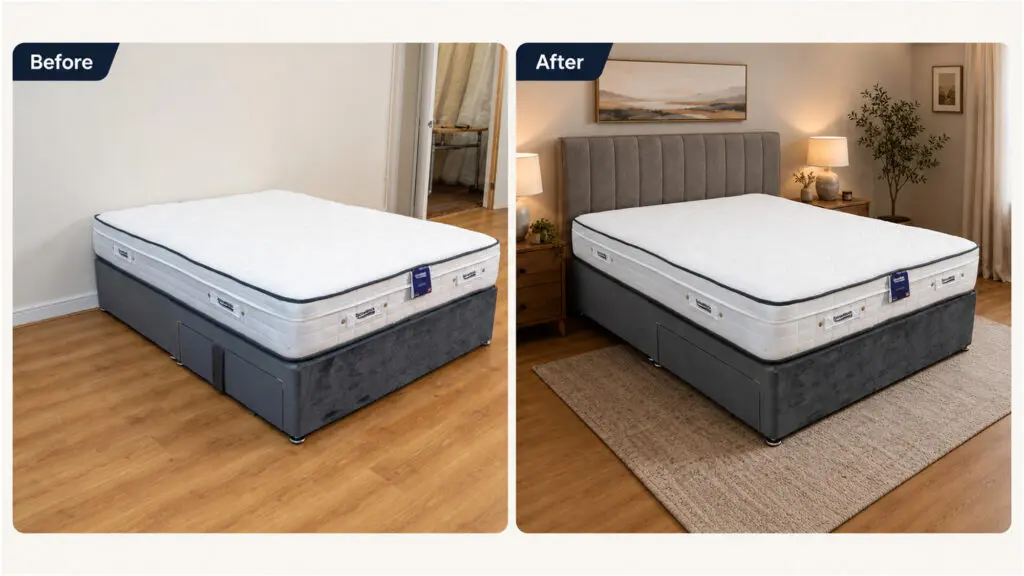
A good example of this is the work we have recently carried out for SpineMatik, a luxury mattress brand focused on spinally engineered sleep. The original photography showed the mattress clearly enough, but the setting did not match the quality or positioning of the product. It looked functional rather than aspirational. The product was there, but the lifestyle context was missing.
Using AI, we were able to take the existing mattress photography and place it into a far more suitable bedroom environment. The result immediately changed the perception of the product. It felt warmer, more premium and more aligned with what a customer would expect from a high-quality mattress brand.
The mattress itself did not change. The story around it did.
That is the power of better ecommerce imagery.
This does not mean businesses should misrepresent products. In fact, the opposite is true. AI should be used carefully and responsibly. The product needs to remain accurate. Key details such as shape, colour, texture, branding and proportions should be preserved. But the surrounding environment can be transformed to help customers understand how that product might look in the real world.
For many ecommerce businesses, this opens up a huge opportunity.
A furniture brand can show products in aspirational interiors without needing to build multiple physical room sets. A clothing brand can create cleaner campaign-style imagery from simple product shots. A homeware business can show items in seasonal settings. A manufacturer can turn flat or technical product photography into images that feel more polished, professional and sales-focused.
The benefits are obvious.
AI-assisted imagery can reduce the need for expensive staged photography. It can speed up content production. It can help create consistency across a website. It can allow products to be presented in a way that reflects the brand rather than the limitations of the original photo.
Most importantly, it can stop good products from looking average.
This is where many ecommerce websites are still falling short. They may have invested in the website build, product descriptions, payment systems, email marketing and advertising, but the product images still feel like an afterthought. That is a problem because the customer does not separate the image from the product. If the image feels cheap, the product feels cheap.
AI has raised the standard.
Customers are now seeing cleaner visuals, better lifestyle imagery and more polished product presentation across the web. As this becomes more common, weaker imagery will stand out for the wrong reasons. It will not just look dated. It will look careless.
For businesses selling online, the question is no longer whether better imagery would help. It almost certainly would. The real question is whether the imagery on your website is helping customers feel confident enough to buy.
At Insignia Creative, we see AI as a practical creative tool. Not a gimmick. Not a shortcut for poor strategy. Used properly, it can help ecommerce brands present products with the quality, clarity and confidence they deserve.
The SpineMatik example shows exactly what is now possible. A basic product image can become a premium lifestyle visual. A functional shot can become a sales asset. A product that was already good can finally be shown in the right light.
Poor ecommerce imagery used to be understandable.
Now, there is no excuse.